
Trust Must Be Earned Is Backwards
Trust must be earned" is backwards. My approach: I trust first. If you break that trust, you can earn it back.
Darren Nerland
3/3/20262 min read
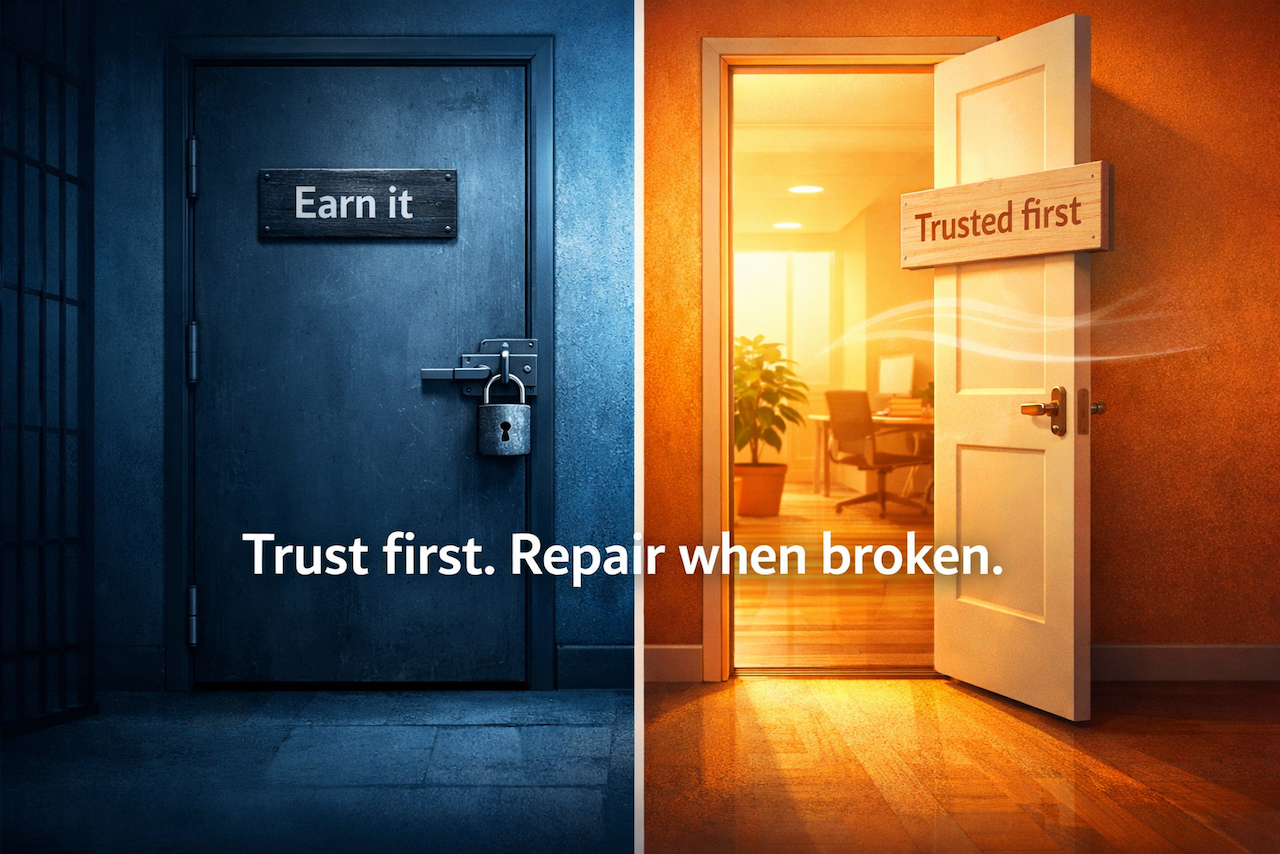
"Trust must be earned" is backwards. My approach: I trust first. If you break that trust, you can earn it back.
The Problem with "Earn My Trust"
It puts the burden of proof on everyone else. Most people don't realize it, but this creates a set of unspoken hurdles before anyone has done anything wrong.
Prove you're competent before I'll back you
Prove you won't disappoint before I give you room to move
Prove you belong before I include you
For high-performers with existing privilege, that feels like a healthy challenge. For underrepresented groups, new team members, or neurodivergent individuals, it feels like a trap. It undermines psychological safety, which is the clearest predictor of high-performing teams.
What Trust-First Actually Means
Assume good intent. You're here for the right reasons.
Support you until there's a clear reason not to
Have hard conversations when needed, not avoid them
Hold you accountable to results and impact
Separate mistakes from identity
It's easier to challenge someone when you've already made clear you care about them. That's the heart of Radical Candor: care personally, challenge directly.
Trust-First in Hybrid and Remote Work
You can't hover over desks. You can't read tone in Slack. You can't check effort, only evaluate outcomes. What you need: clear goals, consistent communication, and foundational trust. Trust is the oxygen of remote collaboration.
The Bias Factor
"Earning trust" is often coded language. "He's a natural leader" means I instinctively trust him. "She still needs to earn trust" means I don't see her as leadership material yet. We extend immediate trust to people who remind us of ourselves. By choosing trust first, we create space for different styles, backgrounds, and paths to leadership.
Trust-First in Action
Start every 1:1 assuming capability. Instead of "What went wrong?" try "How are things going? Anything in the way I can help remove?"
Be clear about your default. Tell your team: "My default is to trust until proven otherwise. If something's not working, we'll talk about it together."
Design systems that reinforce trust. Transparent decision-making, autonomy in workflows, feedback loops that invite honesty.
Model vulnerability. Share when you've made mistakes. Own them, repair them. Show trust isn't fragile, it's resilient.
"I want you to know that I trust you. Not because you've earned it, but because you're here. That means something. If we hit a snag, we'll work through it together." — Try opening your next meeting with this. Watch what happens.
#TrustFirstLeadership#PsychologicalSafety#LeadershipDevelopment#RadicalCandor#InclusiveLeadership#HumanCenteredLeadership